


Perdigon Nymph Rusty Black Spot - TACTICAL SERIES - Copper Bead
Product Type: Nymphs
SKU: 1634-2.5mm
Tags:
new
Brand: La Fine Mouche
Perdigon Nymph - Rusty Black Spot
The Rusty Black Spot is a perdigon with a dark, streamlined profile, designed to combine subtlety, contrast and fast sink rate.
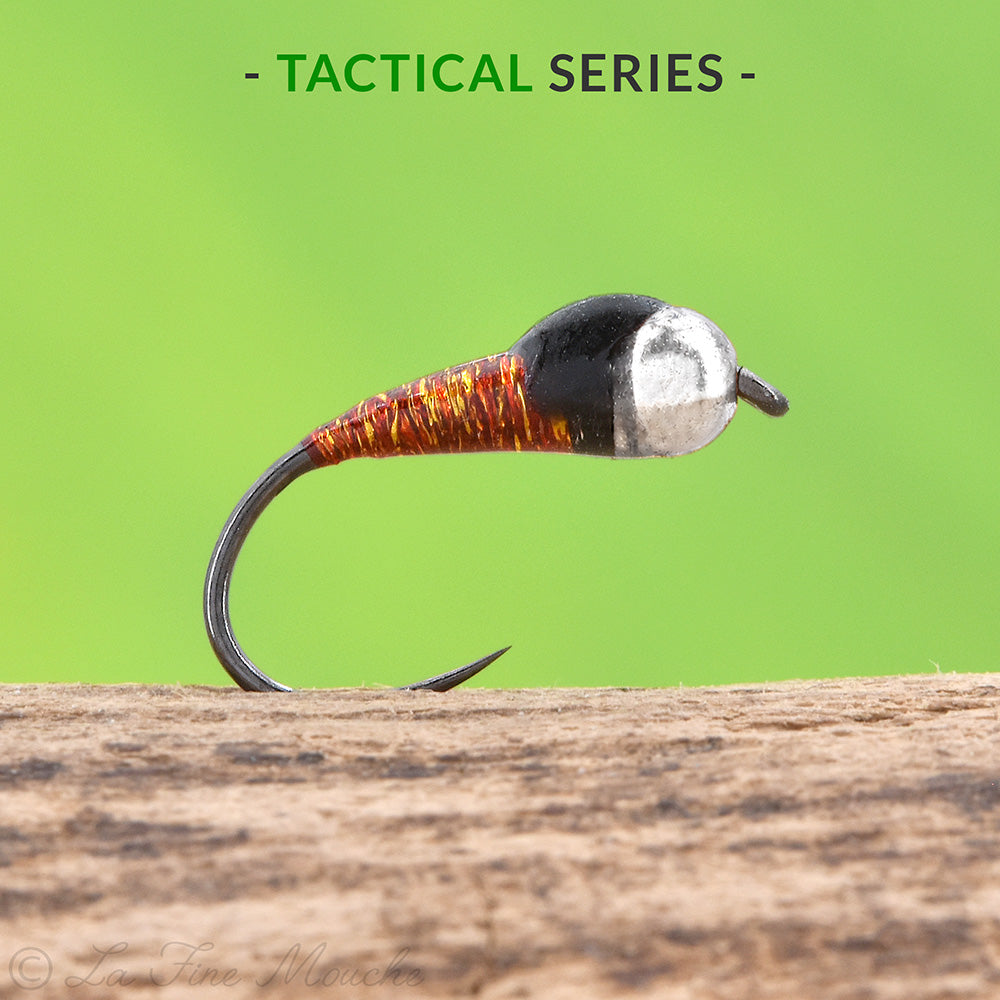
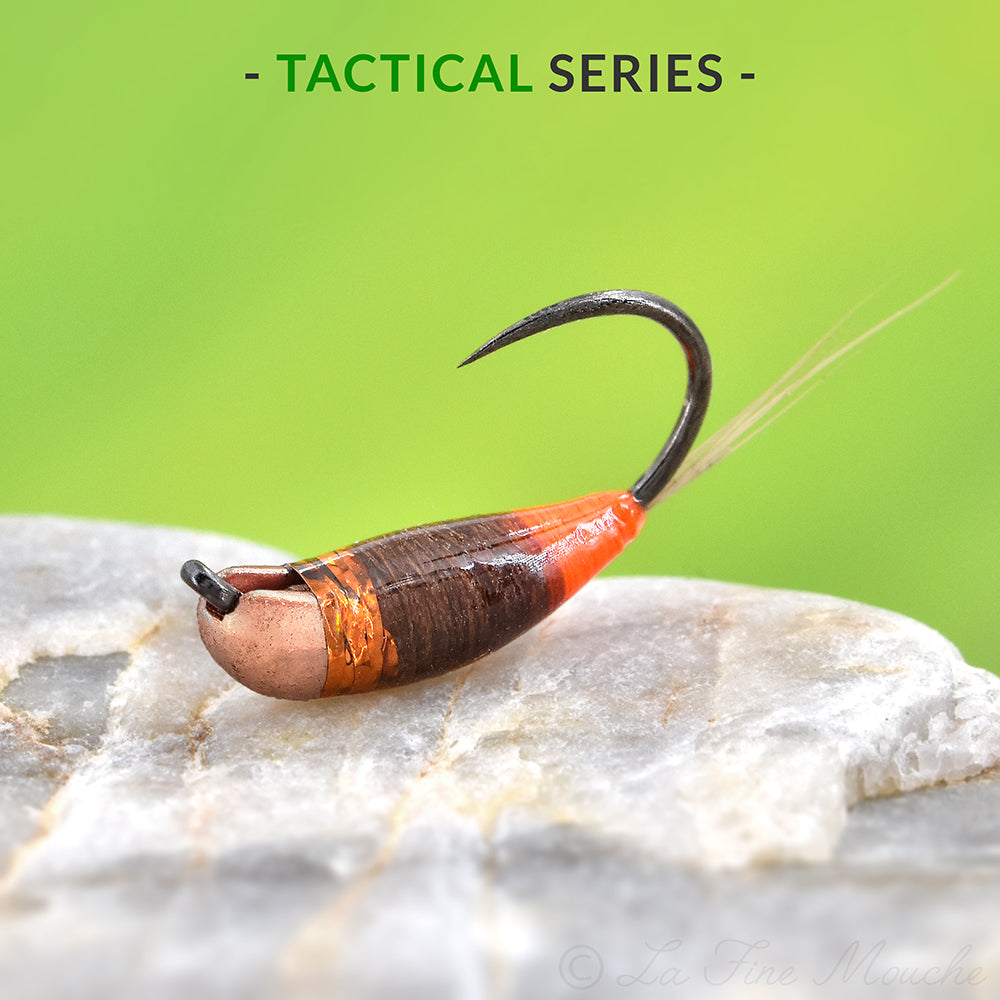
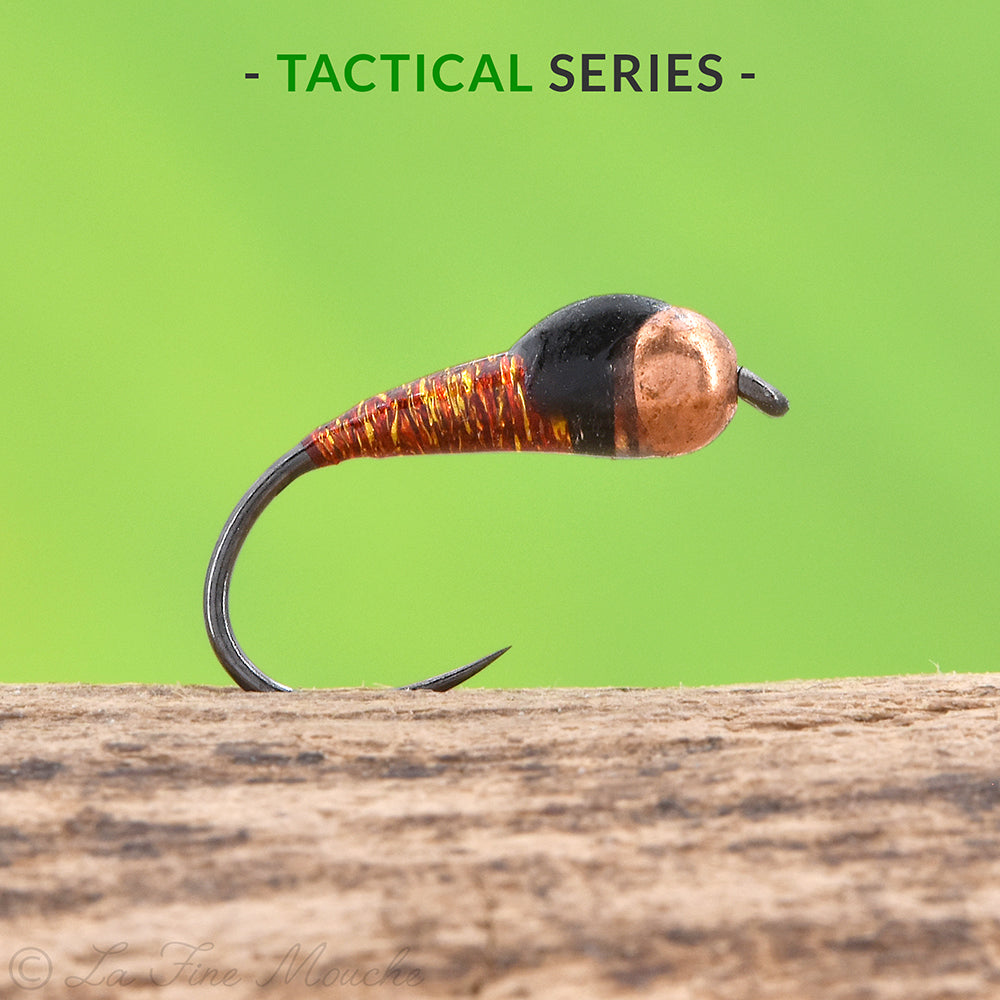
Its rusty brown body with coppery highlights features a small black Black Spot just behind the bead, paired with a copper tungsten bead. This combination gives it a sober profile with just the right amount of contrast.
Its slim, smooth, varnished body helps it cut efficiently through the water. The Rusty Black Spot is also tied without a tail, a deliberately pared-back tying style that limits anything that could slow its descent.
The Rusty Black Spot nymph is part of our Tactical Series nymph collection: premium perdigons carefully tied by our most experienced fly tiers.
Premium tying
The Rusty Black Spot - Copper Bead is tied on top-quality HDN 302 Dohiku hooks, renowned for their consistency and excellent sharpness.
Available sizes
| Ø Tungsten Bead | Hook Size | Hook Reference |
|---|---|---|
| 2.5 mm | #18 | HDN 302 Dohiku |
| 2.8 mm | #16 | HDN 302 Dohiku |
| 3 mm | #14 | HDN 302 Dohiku |
| 3.5 mm | #14 | HDN 302 Dohiku |
| 3.8 mm | #12 | HDN 302 Dohiku |
Optimized sink rate
A perdigon profile is designed to offer minimal resistance in the water. On the Rusty Black Spot, the slim, smooth, varnished body, the absence of a tail and the copper tungsten bead help it sink quickly down to fish holding deep or in stronger currents.
Match the weight to the river profile
To achieve the most drag-free drift possible, it is important to match the weight of the nymph to the depth and speed of the current.
If you fish too heavy, your line may become too tight and the nymph can drag underwater. Conversely, if it is too lightly weighted, it may stay too high in the water column and be swept away quickly by the current.
The Rusty Black Spot is available in five tungsten bead diameters: 2.5 mm, 2.8 mm, 3 mm, 3.5 mm and 3.8 mm, to suit different depths and current speeds.
Share
Let customers speak for us

tres bon produit je recommande, et recu tres rapidement et bien protégé merci


Conforme à ma commande

Tous les articles que j'ai commandés correspondent à ce que j'espérais.
De très bonne qualité.


c'est la 1ere fois que je commande sur le site de la fine mouche.
les GAMMARES ainsi que les MICRO RINGS( hanàk),sont tout à fait conforment à ce que j'attendais.
je suis entièrement satisfait !

Super chest pack. Rien a dire de plus. C'est celui que je voulais, je le trouve parfait

Parfait elles sont très belles

Produit conforme à mes attentes


Vraiment top et le sav de la fine mouche aussi

Site super, Jérémi est très sympa et de très bons conseils.
Livraison rapide et colis très bien emballé .
Bravo.
Je recommande ce site.
Je ne peux pas l'évaluer car je ne m'en suis pas encore servi.
Mais je peux dire que ça a l'air costaud.
