

Adding backing to a fly reel: methods and the right amount
In this guide, I'll show you three simple techniques for adding backing to a fly reel and working out the right amount.
The aim is to leave 2 to 3 mm of clearance below the spool rim for better line management and smoother winding.
Backing also helps reduce fly line memory: by increasing the effective arbor diameter, it keeps the fly line from being wound so tightly around the spool.
An incorrectly filled spool can quickly cause problems: the fly line can tangle on the spool, rub more and become harder to wind in efficiently. Friction also causes premature wear on the fly line.
By contrast, a correctly filled spool lets the fly line run off more smoothly and allows faster winding.
1. The method using 2 identical spools
This method is simple and reliable. It uses two identical spools and saves you having to calculate the exact length of backing.
You judge the fill level by eye on the spool, then transfer everything to put the lines in the correct order.
Step 1: Wind the fly line onto spool A
- Attach the front end of the fly line (the end that connects to the leader) to spool A.
- Wind on the entire fly line.
- This step allows exactly the right amount of space for the fly line.
Step 2: Add the backing
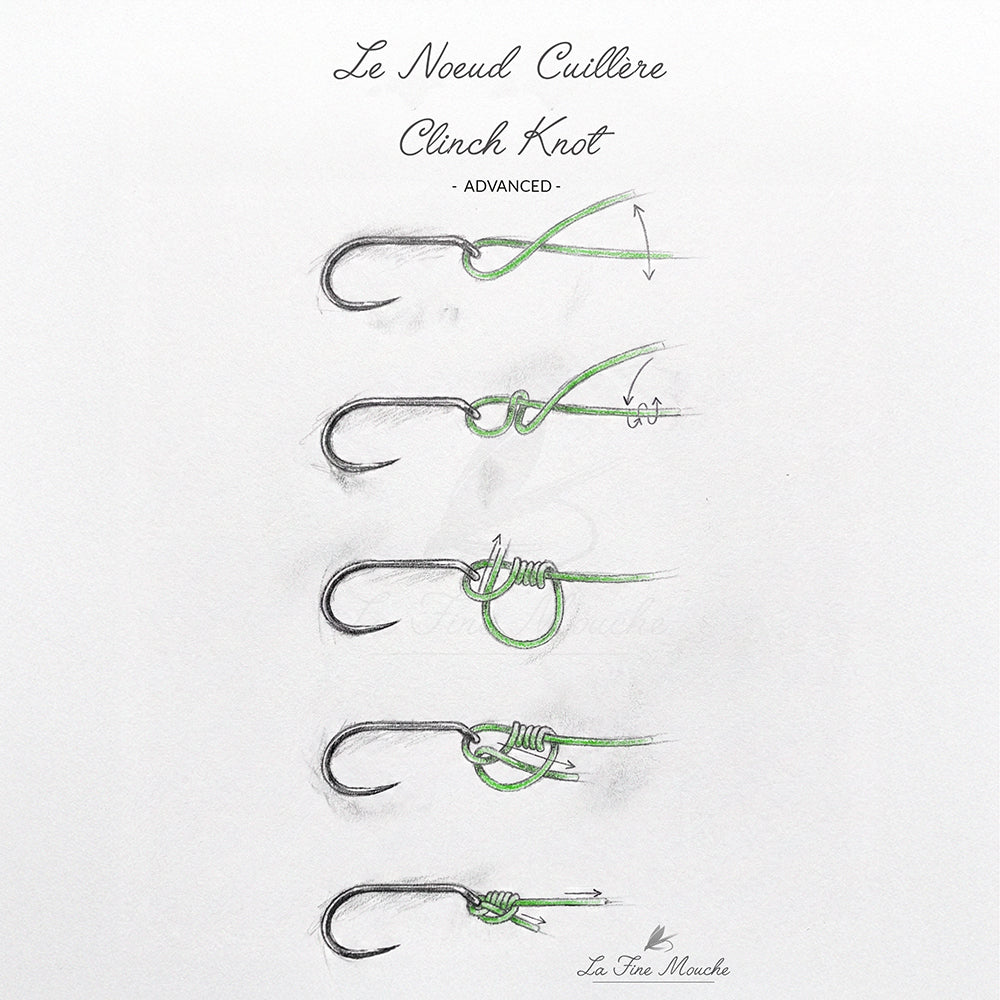
- Attach the backing to the fly line loop with an improved clinch knot.
- Trim the tag end to about 2 mm and lightly melt the tip to secure it.
- Wind the backing onto spool A.
- Stop 2-3 mm below the rim.
Step 3: Transfer to spool B
- Wind everything from spool A onto spool B.
- Maintain even tension.
- The transfer puts the lines in the correct order.
The end result
- Backing underneath
- Fly line on top
- The ideal fill level
2. The single-spool method
This method follows the first two steps above but uses just one spool.
- Wind on the fly line, then the backing, as in method 1.
- Unwind everything and lay it flat on a clean surface without any overlaps.
- Attach the backing directly to the reel.
- Wind everything back on under light tension.
The main challenge is avoiding crossed lines and knots. Work slowly and keep the fly line and backing neatly arranged before winding them back on.
3. The gradual adjustment method using one spool
You can also achieve the right fill level by making gradual adjustments.
Before you start
Use the reel manufacturer's recommendations as a starting point. These generally specify a suitable backing length for the fly line model. This is a useful guide, but don't hesitate to add a little extra: it is easier to shorten it afterwards, and makes for a neater setup than adding more later.
Then check by eye: there should be 2 to 3 mm of clearance below the rim.
- Attach the backing to the reel and wind on the recommended length.
- Connect the fly line to the backing.
- Wind everything onto the spool.
- Check the fill level and adjust if necessary.
How do you adjust it?
If the spool is too full, unwind the fly line.
Shorten the backing, reattach it to the fly line, then wind everything back on under light tension. Check again and repeat if necessary.
Key takeaway
This method may take one or more attempts, but it is straightforward and only requires one spool.